Why Every Small Business Needs a Marketing Plan (Even If It's Only One Page)
Simple planning can make a big difference in your business growth.
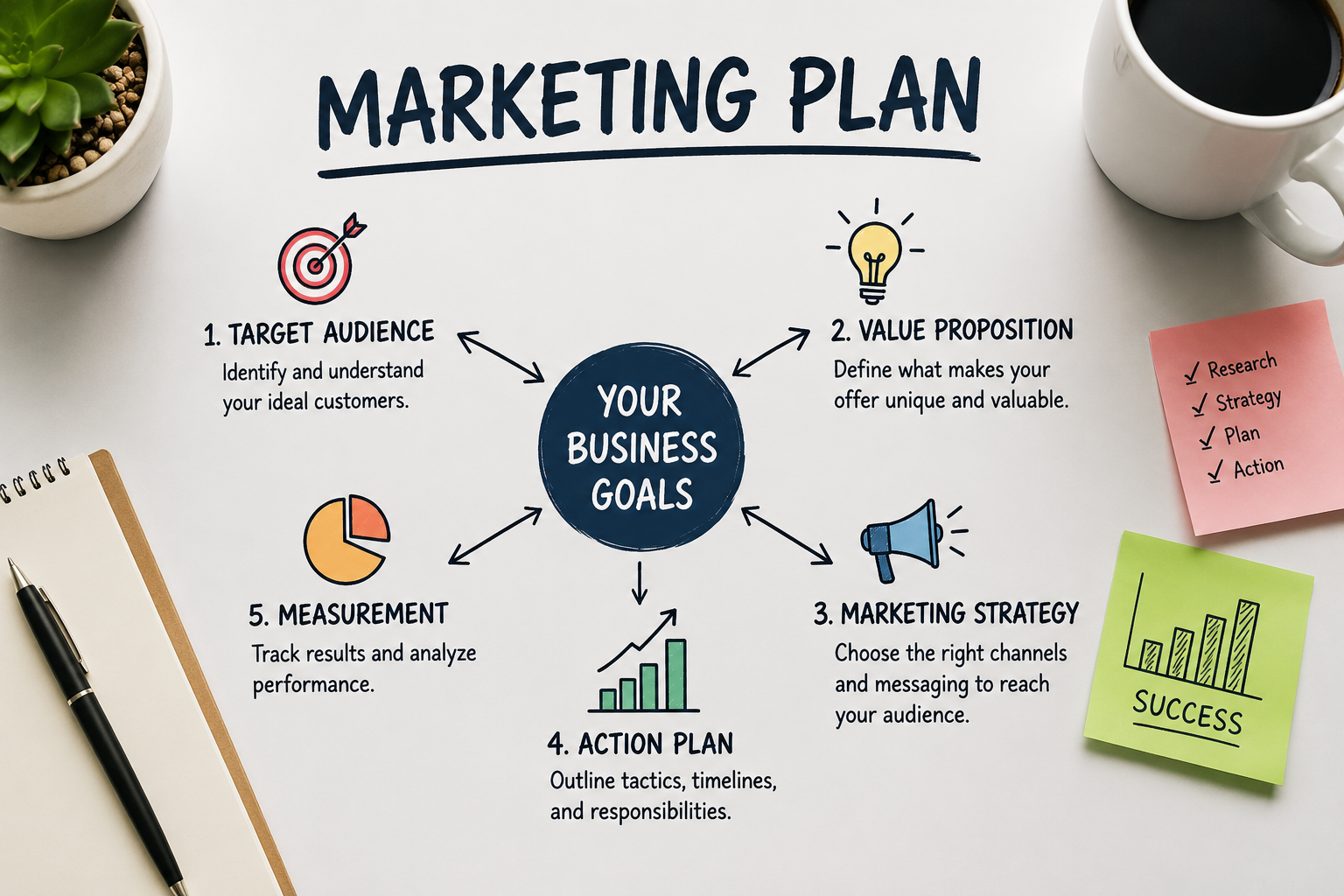
Many small business owners wear multiple hats. You're managing operations, serving customers, handling finances, supporting employees, and trying to find time to market your business. It's no surprise that marketing often becomes reactive instead of strategic. The good news is that a marketing plan doesn't have to be lengthy or complicated to be effective. In fact, one of the most valuable tools a small business can have is a simple, one-page marketing plan that clearly defines where the business is today, where it wants to go, and how it plans to get there.
A marketing plan isn't just a document—it’s a roadmap that helps you make smarter decisions, invest your marketing dollars wisely, and stay focused on activities that move your business forward. Whether you own a construction company, retail store, professional service firm, manufacturing business, nonprofit organization, or family-owned company, having a marketing plan creates clarity and confidence.
What Is a Marketing Plan?
A marketing plan is a guide that outlines how your business will attract new customers, strengthen relationships with existing customers, and communicate your value to the marketplace.
It doesn't need to be 50 pages long.
For many businesses, a one-page marketing plan answers six important questions:
- What are our business goals?
- Who are our ideal customers?
- What makes us different?
- How will customers find us?
- What marketing activities will we focus on?
- How will we measure success?
When these questions are answered, every marketing decision becomes easier.
Why Businesses Without a Marketing Plan Struggle
Many businesses rely almost entirely on referrals or repeat customers. While those are valuable, they shouldn't be your only source of new business.
Without a plan, marketing often looks like this:
- Posting on social media only when someone remembers
- Running advertisements without a clear objective
- Updating the website once every few years
- Sending emails only when there's a sale
- Sponsoring events without measuring the return
- Trying every new marketing trend without a strategy
These activities may create visibility, but they don't always produce meaningful results. A marketing plan brings purpose and consistency to every effort.
The Benefits of Having a Marketing Plan
1. It Provides Direction
Instead of wondering what to post this week or where to spend your advertising budget, you'll have a roadmap.
Your marketing becomes intentional rather than reactive.
2. It Helps You Spend Money More Wisely
Marketing budgets are valuable resources.
A marketing plan helps prioritize investments that align with your goals instead of chasing the latest trend or platform.
Whether you're investing in a new website, Google Ads, social media, email marketing, or community sponsorships, your decisions should support an overall strategy.
3. It Creates Consistency
Successful brands communicate consistently.
That means your website, social media, advertising, email newsletters, signage, and printed materials all reinforce the same message.
Consistency builds trust, and trust builds business.
4. It Helps You Measure Results
One of the biggest advantages of having a marketing plan is knowing whether your efforts are working.
Track meaningful metrics such as:
- Website traffic
- Phone calls
- Online inquiries
- Quote requests
- Event attendance
- Email open rates
- Google Business Profile interactions
- Customer reviews
- Sales growth
When you measure results, you can confidently adjust your strategy over time.
Five Questions Every Marketing Plan Should Answer
- Who Are You Trying to Reach?
One of the most common mistakes businesses make is trying to market to everyone. Instead, identify your ideal customer.
- Consider:
- Industry
- Location
- Age
- Business size
- Job title
- Challenges
- Buying habits
The more clearly you understand your audience, the more effective your marketing becomes.
2. What Makes Your Business Different?
Ask yourself: Why should someone choose your business instead of your competitors?
Your answer might include:
- Outstanding customer service
- Years of experience
- Specialized expertise
- Family ownership
- Fast response times
- Industry certifications
- Local relationships
- Innovative solutions
Your unique value should appear throughout your marketing.
3. Where Will Customers Find You?
Today's customers research before they buy. Your online presence should include:
- A professional website
- An optimized Google Business Profile
- Active social media accounts
- Positive online reviews
- Helpful blog articles
- Email communications
Think about where your customers spend their time and meet them there.
4. What Are Your Marketing Priorities?
Trying to do everything often leads to accomplishing very little. Instead, choose three to five priorities for the year.
For example:
- Redesign the website
- Improve local SEO
- Publish two blog articles each month
- Send a monthly email newsletter
- Increase Google reviews
- Attend community events
- Strengthen social media engagement
Small, consistent improvements add up over time.
5. How Will You Measure Success?
Success looks different for every business. Your goals may include:
- Increasing website traffic by 20%
- Generating 25 qualified leads each month
- Growing your email subscriber list
- Improving search rankings
- Increasing event attendance
- Boosting online reviews
- Increasing sales
Choose metrics that support your business objectives.
Real-World Example
Imagine a locally owned excavation company that depends heavily on referrals. Instead of relying solely on word-of-mouth, they create a one-page marketing plan focused on:
- Updating their website with recent projects
- Publishing one educational article each month
- Sharing weekly jobsite photos on social media
- Asking satisfied customers for Google reviews
- Sending a quarterly customer newsletter
- Sponsoring local community events
None of these activities require a large marketing department.
Together, they create consistent visibility, strengthen credibility, and generate new business opportunities throughout the year.
Getting Started Doesn't Have to Be Complicated
Many business owners delay creating a marketing plan because they believe it has to be perfect.
It doesn't. Start by writing down:
- Three business goals
- Three marketing priorities
- Three ways you'll measure success
That's enough to begin. As your business grows, your marketing plan can grow with it.
Remember, the best marketing plan isn't the longest one—it's the one you'll actually use.
Quick Takeaways
Every business benefits from having a marketing plan. A one-page plan is often enough to create clarity and focus.
Marketing should be intentional, not reactive. Consistency builds trust and long-term growth.
Measure your results so you can make informed decisions. Small improvements made consistently create meaningful business success.
LSC Pro Tip
Don't try to tackle every marketing channel at once. Choose a few high-impact activities—such as improving your website, maintaining your Google Business Profile, and sending a monthly email newsletter—and execute them consistently. A focused strategy almost always outperforms a scattered one.
LSC's Marketing Minute™
One of the biggest lessons I've learned over more than 30 years in marketing and communications is that successful businesses rarely grow by accident. They grow because they have a plan, stay consistent, and remain focused on serving their customers well. Your marketing plan doesn't have to be complicated. It simply needs to give your business direction. Even a single page can become one of the most valuable tools you use throughout the year.
Ready to Build a Marketing Plan That Works?
Whether you're launching a new business, refreshing your brand, or looking for a clearer marketing strategy, Lamerton Strategic Communications can help. Together, we'll create a practical roadmap tailored to your goals—one that strengthens your brand, connects with your audience, and supports sustainable business growth. Because great marketing doesn't happen by chance—it happens by strategy.