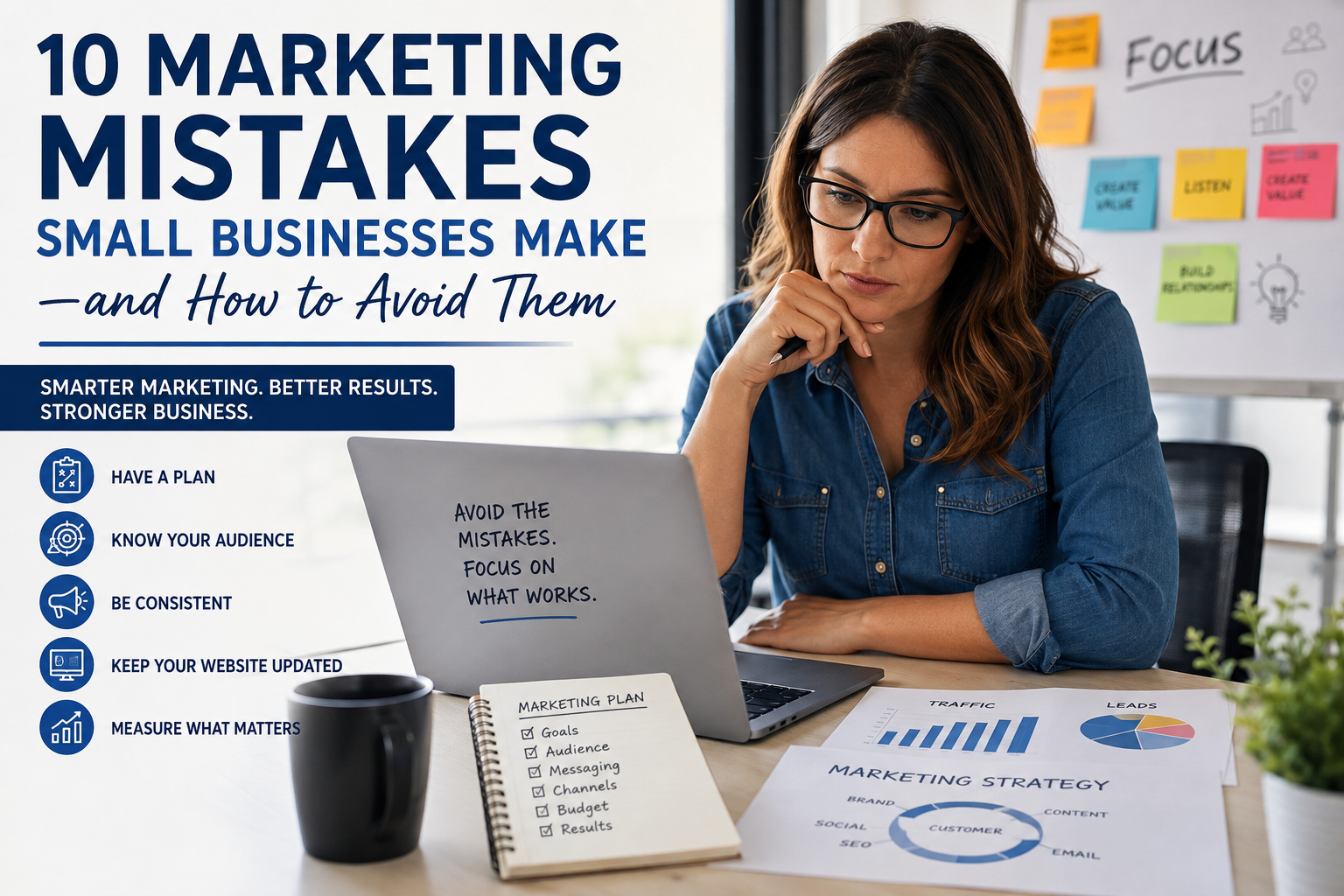
10 Marketing Mistakes Small Businesses Make—and How to Avoid Them
Small marketing mistakes can add up. Knowing what to watch for can help you build a stronger brand, reach the right customers, and get more from your marketing investment.
Marketing a small or medium-sized business can sometimes feel overwhelming. There are websites to maintain, social media channels to manage, emails to send, events to promote, advertisements to consider, and new marketing tools appearing almost every day.
The challenge isn't necessarily finding ways to market your business. The challenge is deciding which opportunities deserve your time, attention, and budget.
Over the years, I've seen businesses make many of the same marketing mistakes. Most aren't dramatic. They're small decisions—or sometimes a lack of decisions—that gradually make marketing less effective.
The good news? They're also fixable.
Here are 10 common marketing mistakes and practical ways to avoid them:
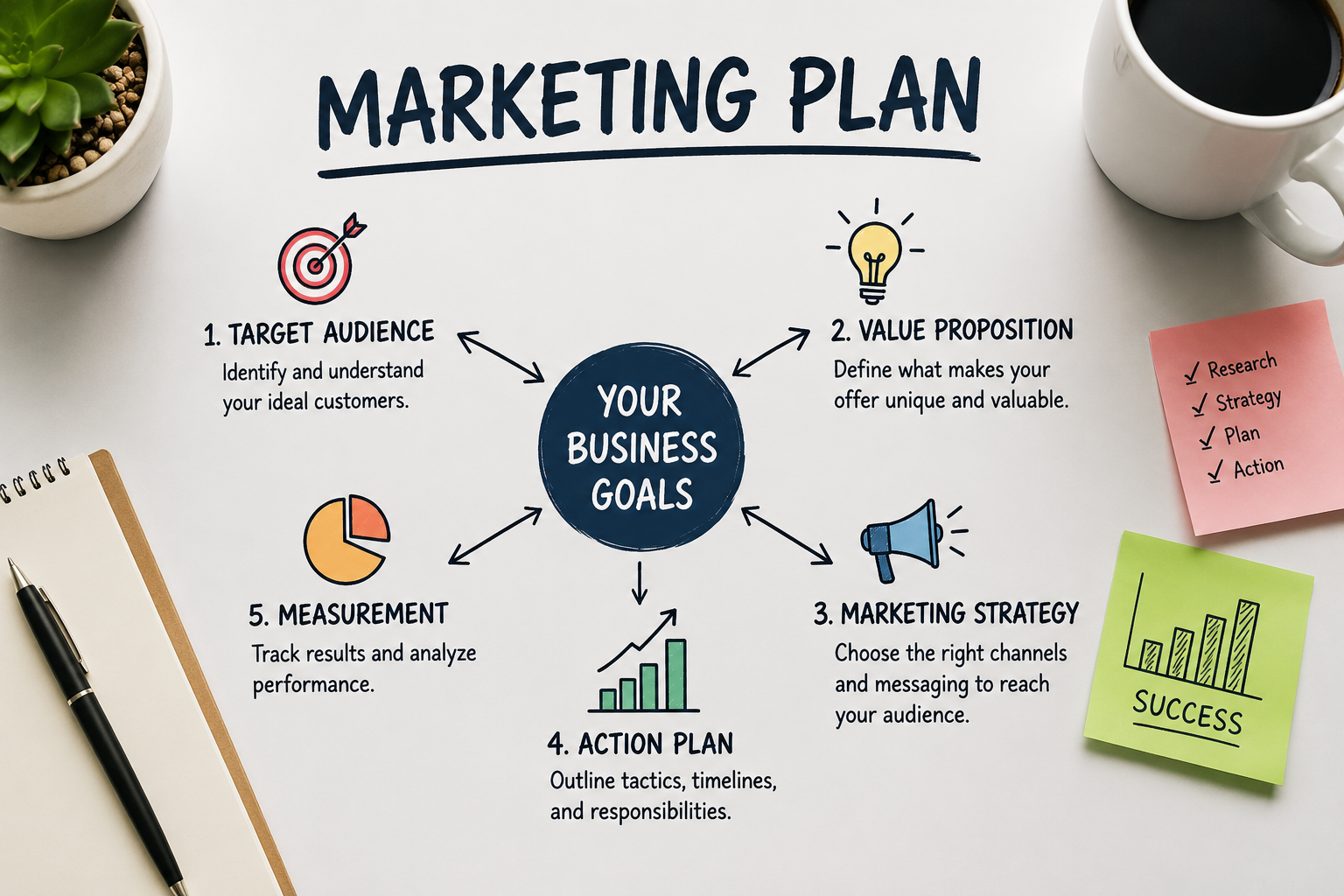
Mistake #1: Marketing Without a Plan
One of the most common mistakes is jumping directly into marketing activities without first deciding what you're trying to accomplish.
A business starts posting on Facebook. Someone suggests Google Ads. Another person wants to sponsor an event. Before long, money and time are being spent in several places without a clear strategy connecting them. How to avoid it: Start with a simple marketing plan. Identify your business goals, audiences, key messages, marketing priorities, budget, and how you'll measure results. Your plan doesn't have to be complicated—even one page can provide valuable direction.
Mistake #2: Trying to Market to Everyone
It can be tempting to say, "Everyone is our customer." Usually, they're not. The more clearly you understand your ideal customer, the more effectively you can communicate with them. A construction contractor purchasing equipment has very different priorities than a homeowner looking for a local service provider. How to avoid it: Define your primary audiences. Consider where they're located, what problems they're trying to solve, how they make purchasing decisions, and where they look for information. When you know who you're talking to, it's much easier to determine what to say.
Mistake #3: Being Inconsistent
A business posts regularly for two months and then disappears for six. An email newsletter goes out twice and never returns. The website uses one message while social media uses another. Inconsistency makes it difficult to build recognition. Customers may not need your product or service the first time they see your marketing. They may not need it the tenth time either. But consistent visibility helps ensure they remember you when the need eventually arises. How to avoid it: Create a realistic schedule you can maintain. Consistency doesn't mean posting every day. It means showing up regularly with useful, recognizable communication.
Mistake #4: Neglecting Your Website
Your website may be one of the first places a potential customer goes after hearing about your company. If they find outdated information, broken links, old photos, confusing navigation, or a site that doesn't work well on a phone, that experience becomes part of their impression of your business. How to avoid it: Review your website regularly. Make sure your services, locations, team information, contact details, photography, and calls-to-action are current.
Your business evolves. Your website should evolve with it.
Mistake #5: Making Every Message a Sales Pitch
"Buy now." "Call today." "Schedule today." "Take advantage of this offer." There is certainly a place for promotional content, but if every communication asks customers to buy something, they'll eventually stop paying attention. Good marketing also educates, informs, entertains, and builds relationships.
How to avoid it: Create a healthy mix of content. Answer customer questions. Share useful tips. Introduce employees. Highlight projects. Celebrate milestones. Share community involvement. Explain your products and services. Give people a reason to follow your business even when they aren't ready to buy.
Mistake #6: Ignoring Your Existing Customers
Businesses often put so much energy into finding new customers that they overlook the people who already know and trust them. Your existing customer base can be one of your most valuable marketing assets. How to avoid it: Stay connected. Email newsletters, service reminders, customer appreciation messages, helpful information, and occasional personal outreach can help maintain relationships. Remember: marketing isn't only about acquiring customers. It's also about keeping them.
Mistake #7: Trying to Be Everywhere
Facebook. Instagram. LinkedIn. YouTube. TikTok. Google. Email. Blogs. Podcasts. Do you need all of them?
Probably not. Trying to maintain every marketing channel often leads to inconsistent or mediocre content across all of them.
How to avoid it: Go where your customers are. A B2B manufacturer may benefit greatly from LinkedIn but have little reason to prioritize TikTok. A local retailer may have completely different needs. Three channels managed well can be far more effective than eight managed poorly.
Mistake #8: Forgetting About Google and Search
Social media gets a lot of attention because it's visible. But don't overlook what happens when someone actively searches for your product or service.
That's a very different type of potential customer. Someone searching "excavation contractor near me" or "industrial equipment dealer" is already expressing a need. How to avoid it: Pay attention to your website's SEO, Google Business Profile, online reviews, location information, page titles, and website content. Make it easy for search engines—and customers—to understand what you do and where you do it.
Mistake #9: Not Measuring Anything
One of the easiest questions to ask about marketing is also one of the most important: Is it working?
If you aren't measuring anything, you don't really know. That doesn't mean every marketing activity needs to generate an immediate sale. Brand awareness, customer engagement, website traffic, and community visibility all have value. But you should still understand what your marketing is accomplishing. How to avoid it: Choose a handful of meaningful metrics. Track website traffic, inquiries, leads, email performance, search visibility, social engagement, event attendance, or sales tied to specific campaigns. Then use what you learn to make better decisions.
Mistake #10: Constantly Chasing the Next Big Thing
Marketing changes quickly. There will always be a new platform, technology, algorithm, or trend promising to transform your business.
Today, much of that conversation surrounds artificial intelligence. Tomorrow, it will be something else. New tools can absolutely make marketing better and more efficient. But they shouldn't replace strategy.
How to avoid it: Before adopting something new, ask: Does this help us reach our audience? Does it support our goals? Does it save meaningful time or improve results? Does it fit our brand? If the answer is no, you don't have to do it just because everyone else is talking about it.
Get the Fundamentals Right: Effective marketing doesn't require doing everything. For most small and medium-sized businesses, success comes from doing a handful of important things consistently: knowing your audience, communicating clearly, maintaining a strong website, staying visible, building relationships, and measuring what works. You won't get everything right all the time. No business does. The goal isn't perfect marketing. It's thoughtful, consistent marketing that supports your larger business goals. Start with the fundamentals. Build from there. And don't be afraid to change direction when the results tell you something isn't working.
Quick Takeaways
- Start with a strategy before choosing marketing tactics.
- Know exactly who you're trying to reach.
- Consistency matters more than being everywhere.
- Keep your website and online information current.
- Balance promotional messages with useful content.
- Don't forget about your existing customers.
- Measure your marketing and learn from the results.
- Use new technology when it supports your strategy—not simply because it's new.
⭐ LSC Pro Tip
Once a quarter, set aside an hour to review your marketing. Look at your website, social channels, email performance, advertising, and upcoming opportunities. Ask three questions: What's working? What's not? What should we do differently?
That simple habit can prevent you from spending an entire year repeating marketing activities that aren't delivering results.
Jeri's Marketing Minute™
One of the most important things I've learned in marketing is that you don't have to do everything—you need to do the right things consistently.
It's easy to look at what another company is doing and think you need to do the same thing. But their audience, goals, budget, and business may be completely different from yours. Before adding another marketing activity to your list, ask yourself: Why are we doing this? Who are we trying to reach? What do we want them to do? If you can answer those three questions, you're already making a better marketing decision.
Need a Fresh Perspective on Your Marketing?
Sometimes the hardest part of marketing is determining where to focus. Lamerton Strategic Communications can help you evaluate what's working, identify opportunities, and develop a practical strategy built around your business, customers, and goals.
Good marketing isn't about doing more. It's about making what you do matter.